


This is the second in a series of three blogs exploring place-based philanthropy. Read Part 1: Rethinking Funding for Nature, Belonging and Place here.
Nature isn’t a sector; it is part of the social infrastructure of a place.
A lot of environmental funding is still implicitly organised around nature as an object: restore habitat, increase biodiversity, improve ecological outcomes. But a place-based perspective asks a different set of questions. At its heart is one question: What is the relationship between people, place and nature?
A place-based lens therefore asks: Who owns the land? Who has access to it? Who decides what “restoration” means? Which communities have historically benefited from environmental investment? Who gets displaced when an area becomes more environmentally attractive? Who has the knowledge to steward local ecosystems? Who is paid to care for nature?
In our projects, we find that people often think of infrastructure as roads, housing, transport, community centres, broadband, etc. But actually, parks, rivers, woodlands, allotments, coastlines, waterways and urban green space are also infrastructure through which social relationships are produced. These spaces serve as meeting places and as places for people to exercise, meet friends and family, you name it. Some groups also see nature as part of their heritage, and ultimately as what builds their sense of belonging to a place.
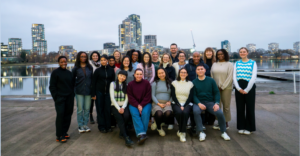
We remember an interesting moment during our Away Day a year ago. We love immersing ourselves in nature, and there is growing evidence that being in nature can support attention, reflection and creative thinking (nature as cognitive infrastructure, perhaps). We were at the West Reservoir Centre in Woodberry Down, North London, which is a beautiful lake now used for conferences, cafes, swimming and other water sports. But we also discussed the uncomfortable backdrop of Woodberry Down, the luxury high-rise apartments surrounding the reservoir, which are the product of a decade-long regeneration programme in which environmental and public-realm improvements have taken place alongside significant changes in housing tenure, affordability and who is able to remain in the neighbourhood.
For example, the completed scheme is expected to have around 190 fewer social-rented homes than before regeneration. And while the planned number of homes has increased substantially, the proportion of social housing has fallen from an initially proposed 33% to around 16%. The microcosm of Woodberry Down, and countless similar examples show us how these issues around nature, inequality, housing, power and belonging can intersect within a place.
Can we invest in nature and conservation without inadvertently investing in social displacement?
Who benefits from nature investment? Environmental investment doesn’t simply restore ecological value. It can create economic and social value, and therefore raises questions about who captures that value. A place-based lens would enable a funder primarily interested in funding nature-based and climate interventions to ask a more expansive set of questions, which ultimately will lead to the funding being more transformative and longer-lasting.
Initiatives like the Wates Neighbourhoods programme demonstrate how environmental restoration can be strengthened when local residents have genuine power over their surroundings.
| Question | Environmental funding | Place-based lens |
| What are we protecting? | Habitat/ecosystem | Ecosystem + relationship to place |
| Who participates? | Environmental organisations | As well as residents + local organisations + landowners |
| What counts as knowledge? | Ecological expertise | Ecological + lived + local knowledge |
| What is success? | Ecological indicators | Ecological + social + economic outcomes |
| Who benefits? | Nature/public | Different groups within the place |
| Over what timeframe? | Project/programme | Stewardship across generations |
| Who has power? | Funders/technical experts | Communities + institutions + landholders |
When we challenge who owns, decides and benefits, nature shifts from being treated as an amenity or a source of speculative value, to being understood as a community asset. Ultimately, nature is not just ecological infrastructure; it is also social, or even cognitive, infrastructure.
Transformative philanthropy must fund not just the physical ecosystem, but the relational capacity and intergenerational stewardship that allow both nature and people to thrive together.


